Mindful eating7 min read
How to track what you eat without counting calories
The plate method, hand portions, a hunger scale, a photo diary and meal grades: five ways to stay aware of what you eat without adding up a single number, and how to tell whether numbers help you or hold you back.
On this page
You don't need to know that lunch was 612 calories to know it kept you full until five. For a lot of people, the number was never the useful part. The noticing was. If counting has started to feel like a test you keep failing, you can keep the awareness and let go of the arithmetic.
You can track what you eat without counting calories by changing what you measure: the shape of your plate, the size of your portions, your hunger before and after meals, or how well each meal served you.
- Five methods that work: the plate method, hand portions, a hunger scale, a photo food diary, and meal grades instead of numbers.
- Start with one. The plate method or a hunger check-in takes seconds and needs no app, no scale and no maths.
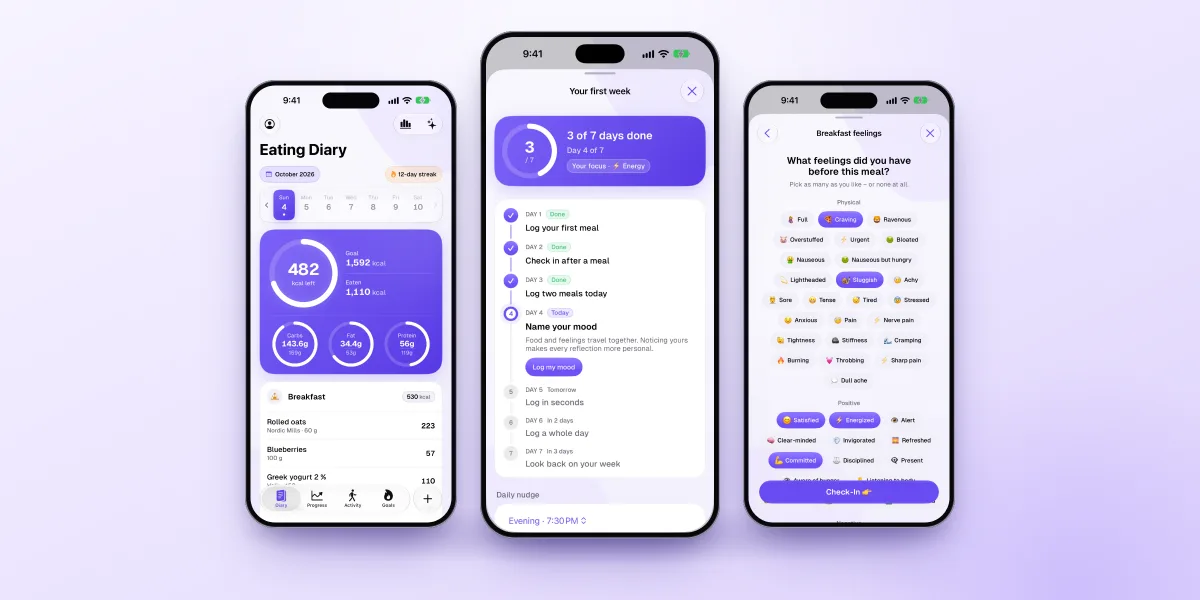
- In Fimbl, Calm mode (Premium) swaps calorie numbers for gentle grades, while the diary keeps counting quietly in the background.
Why some people track better without numbers
Calorie counting works well for plenty of people. Logging food consistently is one of the best-supported habits in weight management.1 But a calorie total is a blunt instrument. It says nothing about whether a meal kept you full, gave you energy or left you craving something an hour later. And for some people, the number itself becomes the problem.
In a study of 493 university students, regular calorie tracking was associated with more anxious attitudes towards food and more restrictive dieting.2 In another, most people with an eating disorder who used a calorie-tracking app felt it had contributed to their symptoms.3 Neither study proves that counting causes harm, but both point the same way: for some of us, the number turns a helpful habit into a stressful one.
The good news is that awareness doesn't need arithmetic. Each of the methods below keeps the part that helps, noticing what and how you eat, and drops the part that doesn't.
Five ways to track food without counting calories
| Method | What you track | Effort | Best for | In FimblSupported |
|---|---|---|---|---|
| 1. Plate method | Proportions on your plate | A glance | Balanced meals, families | Through meal grades |
| 2. Hand portions | Portion sizes, using your hand | A glance | Eating out, travel | No tools needed |
| 3. Hunger scale | Hunger before, fullness after | Ten seconds | Overeating, emotional eating | Meal check-ins, free |
| 4. Photo food diary | A picture of each meal | Five seconds | Spotting patterns at a glance | Photo scan, Premium |
| 5. Meal grades | How well a meal served you | Automatic | Stepping back from numbers | Calm mode, Premium |
1. The plate method
Instead of adding up a meal, look at its shape. Harvard's Healthy Eating Plate suggests filling about half your plate with vegetables and fruit, a quarter with whole grains and a quarter with protein, with healthy oils in moderation.4 The proportions are deliberately approximate and aren't based on calories at all, which is exactly the point. Your question at each meal becomes "is this plate roughly balanced?" rather than "how many calories is this?"
2. Hand portions
Your hand goes everywhere you do, and it scales with your body. NHS Grampian's hand portion guide uses it like this:5
- Two handfulsFruit and vegetables at a meal. One handful is one portion.
- One palmA portion of protein: meat, fish, tofu, beans.
- One fistCarbohydrates like rice, pasta or potatoes at a meal.
- A thumb tipButter, mayonnaise and similar fats. A whole thumb is roughly a portion of cheese.
It isn't precise, and it doesn't need to be. Hand portions are about getting the proportions roughly right, especially when you're eating out and there's nothing to scan.
3. A hunger and fullness scale
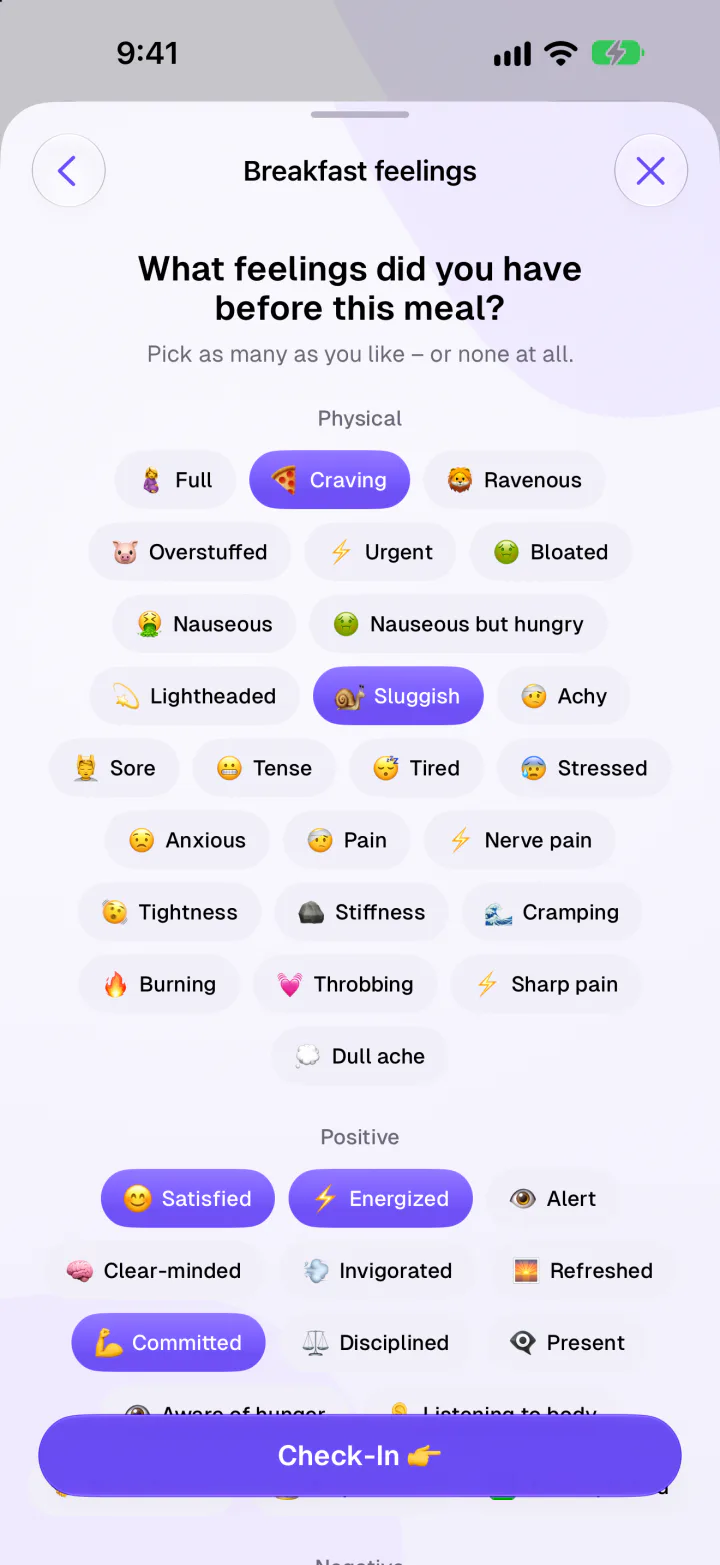
Rate your hunger from 1 (ravenous) to 10 (stuffed) before you eat, and check in again afterwards. Most people feel best starting around 3 or 4 and stopping around 6 or 7. It takes ten seconds and teaches you something no calorie total can: whether you're eating because you're hungry. We cover the scale, and what to do when the urge isn't hunger, in our guide to emotional vs physical hunger.
4. A photo food diary
Take a picture before every meal and snack, and look back at the end of the week. A photo is faster than writing and harder to fudge, and a week of plates side by side shows patterns instantly: how many meals had vegetables, how often dinner came from a box, how big the evening snacks got. Your camera roll works, or a dedicated album. In Fimbl, a photo scan (Premium) also logs the meal for you, and you can hide the numbers it produces with Calm mode.
5. Meal grades instead of numbers
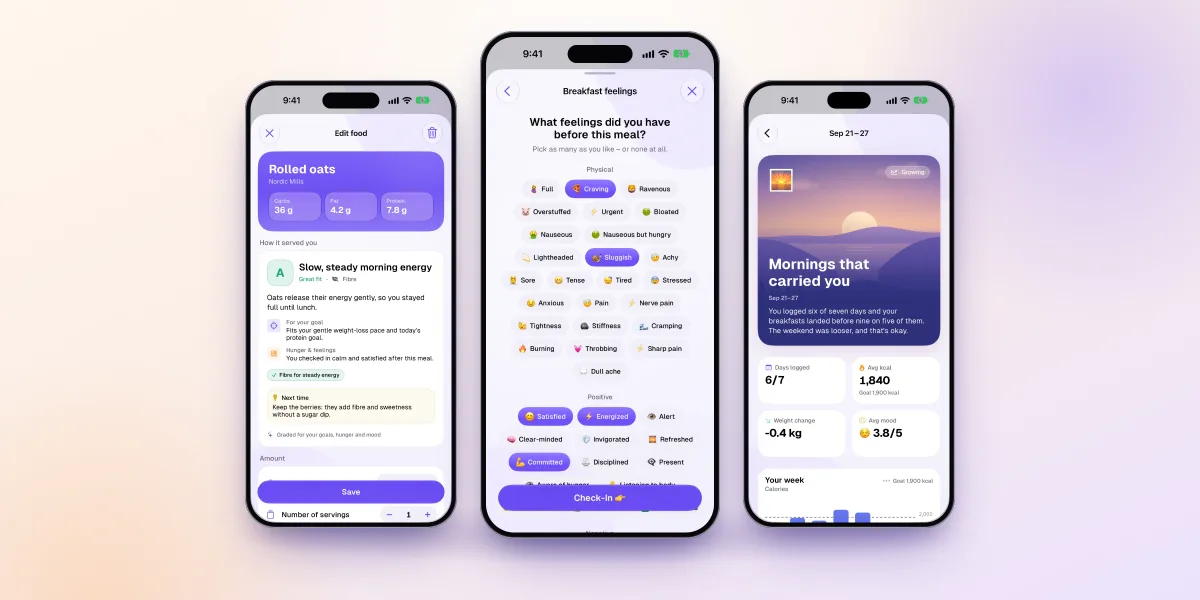
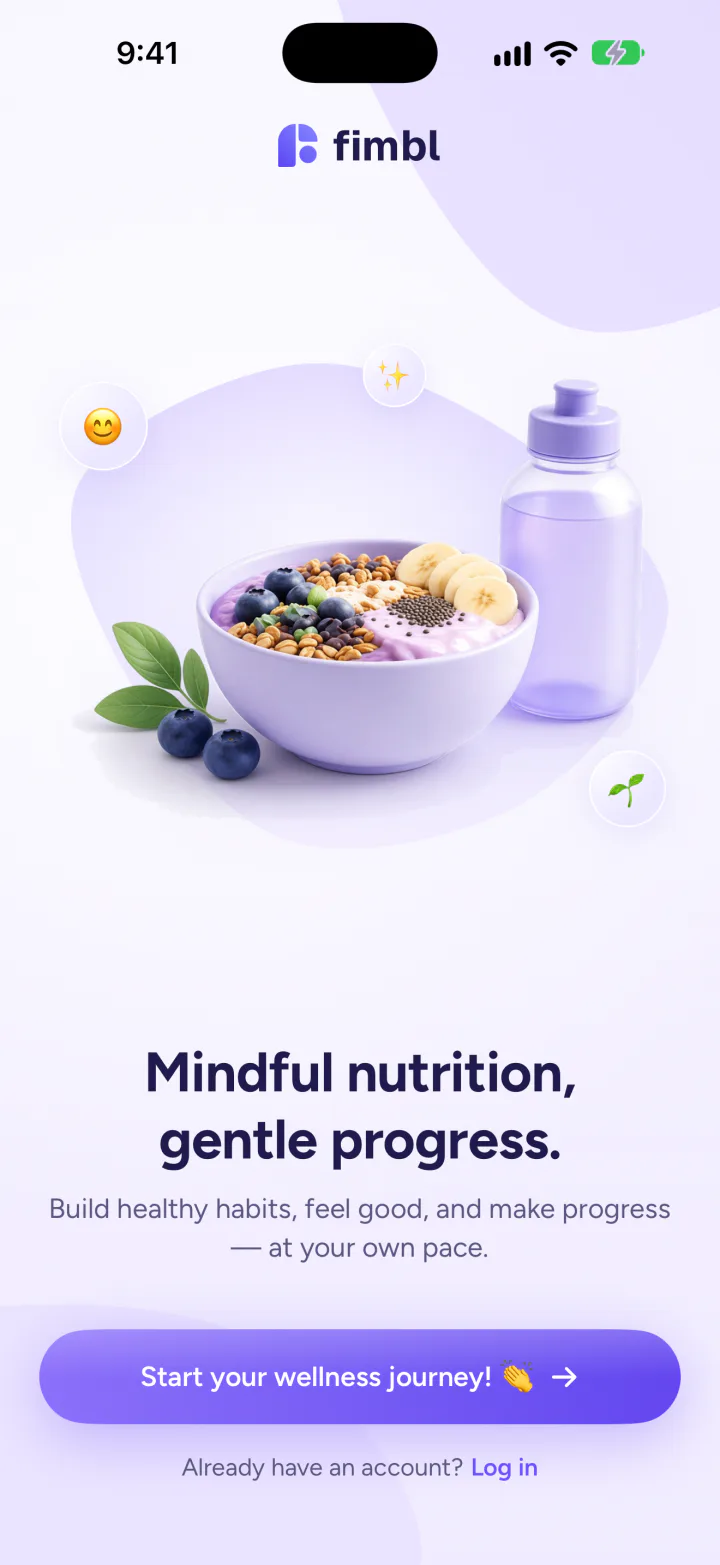
The newest approach replaces the number with a judgement about the meal itself: did it fit your goals, keep you full, leave you feeling good? It's the method we built Fimbl's Calm mode around, because it keeps the useful information and drops the part that makes people anxious.
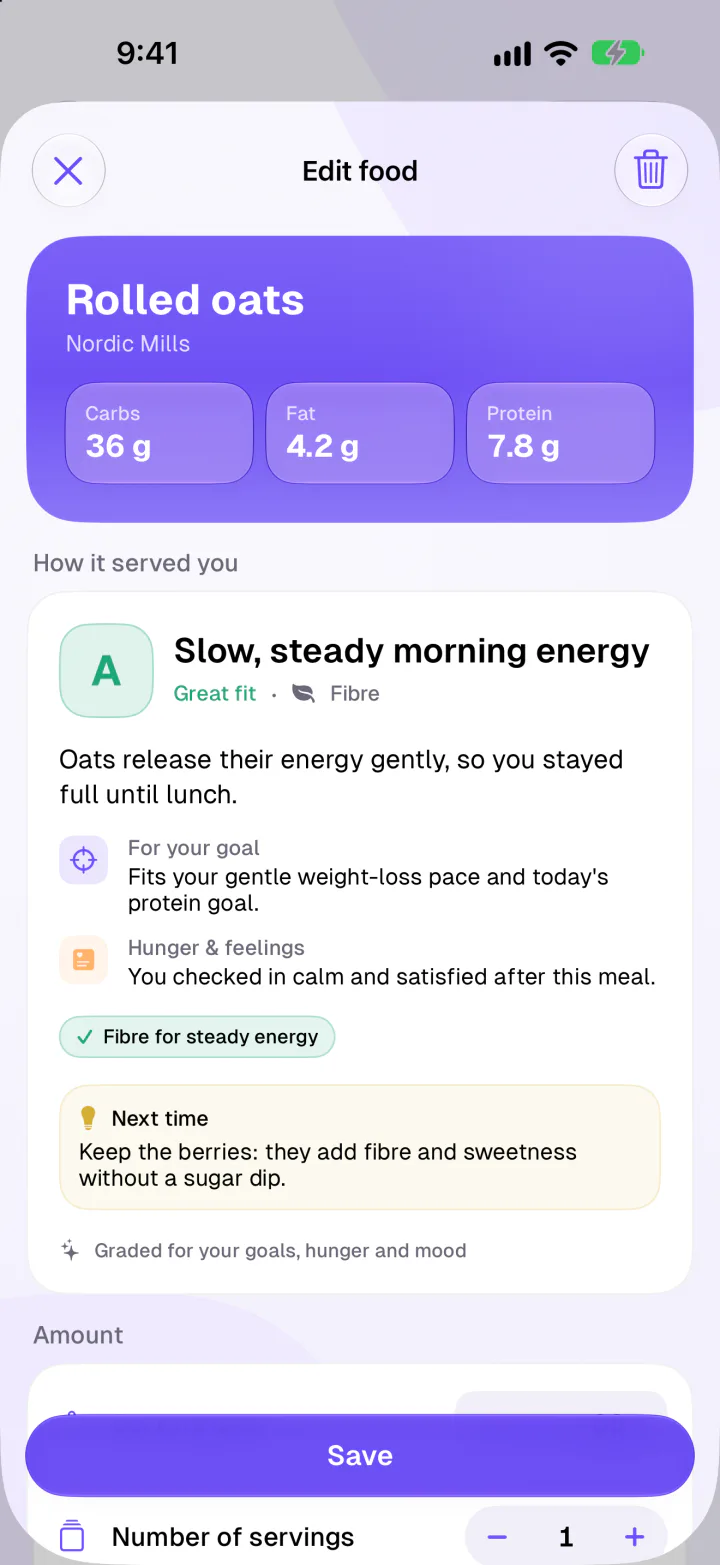
- Calorie numbers are hidden, not deleted
- The diary keeps counting in the background, so you can switch back any time
When numbers help, and when they start to hurt
Going number-free isn't better for everyone. It's a choice, and it helps to know which side of it you're on.
Numbers tend to help when
- You have a specific target
- Training for an event, building muscle, or eating enough after illness.
- A professional asked you to
- Carbohydrate counting for diabetes, or a plan from your dietitian.
- They feel neutral
- You can see a high total and simply carry on with your day.
Consider stepping back when
- A red number ruins your evening
- Guilt is a sign the tool is working against you.
- You avoid foods you can't log
- Turning down a birthday cake because it has no barcode is the number running the show.
- You've quit tracking before
- Burn-out after a few weeks usually means the method asked too much.
There's also a middle path: keep logging food so the record exists, but hide the totals. That's what Calm mode does, and it's why switching back never loses anything. If you'd like to see how other apps handle numbers, our calorie tracker comparison covers each one.
How to get started this week
- Pick one method, not five. The plate method if you want structure, the hunger scale if you tend to overeat, photos if you want the lowest effort.
- Use it at one meal a day for three days. Small and repeatable beats ambitious and abandoned.
- Add a second method if it feels easy. Plate plus hunger scale is a strong pair: one covers what you eat, the other why.
- Look back at the end of the week. What patterns show up without a single number? Our guide on how to start a food diary has a full seven-day plan.
If food and numbers feel overwhelming, you deserve support. If you have a history of disordered eating, or tracking of any kind makes you anxious or rigid about food, talk to a doctor or an eating-disorder service before starting. Fimbl is a food diary, not a medical tool or a treatment for eating disorders.
Keep the awareness, lose the arithmetic
Start with Fimbl's free diary and meal check-ins. When numbers get loud, Calm mode swaps them for gentle grades, and switching back never loses a thing.
- Free hunger and feeling check-ins
- Calm mode: grades instead of calories
- No ads, no streak shame
Questions, answered
Can you track food without counting calories?
Yes. Instead of calories, you can track the proportions on your plate, portion sizes using your hand, your hunger before and after meals, photos of what you eat, or a grade for how well each meal served you. Each keeps you aware of your eating without the arithmetic.
Is calorie counting bad for you?
Not for everyone. Food logging is one of the best-supported habits in weight management. But studies have linked calorie tracking with more anxious attitudes towards food in some groups, and many people with eating disorders say calorie apps made their symptoms worse. If numbers make you anxious or guilty, a number-free method is worth trying.
What is the plate method?
The plate method is a way to build balanced meals by proportion instead of calories. Harvard's Healthy Eating Plate suggests about half the plate vegetables and fruit, a quarter whole grains and a quarter protein, with healthy oils in moderation.
How do I measure portions with my hand?
A common guide uses one palm for a portion of protein, a fist for carbohydrates like rice or pasta at a meal, a handful for a portion of fruit or vegetables (two at a meal) and a thumb tip for fats like butter. It's approximate, but it works anywhere.
Is there a calorie tracker app that doesn't show calories?
Yes. Fimbl for iPhone and iPad has Calm mode (part of Fimbl Premium), which hides calorie numbers and grades each meal from A to F for how well it served your goals, hunger and mood. The diary keeps counting in the background, so you can switch back at any time without losing anything.
Will I still lose weight without counting calories?
Many people do, because methods like the plate method, hand portions and hunger awareness naturally change how much and what they eat. Results vary, though. If you have a specific weight or medical goal, a doctor or dietitian can help you decide whether numbers would help.
Sources
- Burke LE, Wang J, Sevick MA (2011). Self-monitoring in weight loss: a systematic review of the literature. Journal of the American Dietetic Association 111(1). pubmed.ncbi.nlm.nih.gov
- Simpson CC, Mazzeo SE (2017). Calorie counting and fitness tracking technology: associations with eating disorder symptomatology. Eating Behaviors 26. pubmed.ncbi.nlm.nih.gov
- Levinson CA, Fewell L, Brosof LC (2017). My Fitness Pal calorie tracker usage in the eating disorders. Eating Behaviors 27. pubmed.ncbi.nlm.nih.gov
- Harvard T.H. Chan School of Public Health, The Nutrition Source. Healthy Eating Plate. nutritionsource.hsph.harvard.edu
- NHS Grampian, Healthy Weight. Hand portion sizes. healthyweightgrampian.scot.nhs.uk